There is a particular kind of exhaustion that comes not from working too hard, but from working against something that should not be that hard. You know the feeling. The problem is solvable. The people around you are capable. And yet something in the machinery keeps grinding.
Where it started
Salem Creative was founded in 2010, born from a pattern I noticed almost immediately: the requests I received had a common shape. Complex problems standing in the way of human achievement. Sometimes classical engineering and product development was enough. But it quickly evolved towards something more specific: pattern recognition in large datasets and complex systems. Listening to the right people is more important than any specific solution. Asking the right questions is often more valuable than any given specific answer.
The most capable people I had the privilege of working with early on (doctors, nurses, pilots, engineers) understood something instinctively: to design and build the right system, you need the data insights first. Just like humans, the system is only as good as what it knows. Without the right valuable data, the most impressive platform in the world makes little difference.
The through-line was always there, even when the tools looked nothing like what we use today.
The through-line
One early example stays with me. We were building a business intelligence platform in the bioinformatics space. On the surface, a relatively straightforward system. But we quickly realised the client's real challenge wasn't the platform. It was the data. Their team needed to continuously process enormous volumes of material: free-form patient interviews, research reports, results from clinical studies. The knowledge and intelligence were absolutely there. What wasn't feasible was the volume of analysis required within our timeframe.
The solution was an early-iteration agent built on logic programming and customised algorithms developed from real conversations with the domain experts, the remarkable humans who actually know this field. Could it be built better with today's tools? Absolutely. But it solved a real problem, and I will never forget the bright smiles when we reviewed the first results together. We humans still performed the analysis. The agent surfaced the golden nuggets, and we worked with them. The win was that it was now humanly feasible, without sacrificing everything else: other neglected work, free time, and valuable sleep.
More recently, in the energy sector, a different version of the same story. My team and I wrestled for a long time with a problem involving hardware-locked legacy protocols for energy data transport. It drained our energy, stole our focus, and left us exhausted at the end of almost every day. I was deeply tired of it. One evening I described the problem, with all its brutal limitations, to my Claude agent, with access to some useful connectors, including my personal journal which has grown considerably over the years. It didn't solve everything by any stretch of the imagination. But it gave us illumination and a clear plan. The next day, the problem was finally resolved, in a fraction of the time challenges of equal complexity had taken us before.
And then something most unexpected happened. I had a free hour. No meetings, no fires to put out. Just space.
That hour went to a conversation with a colleague. Unhurried, present, genuinely useful. It reminded me why human collaboration is not something we automate. It's the point.
Why Sólfar
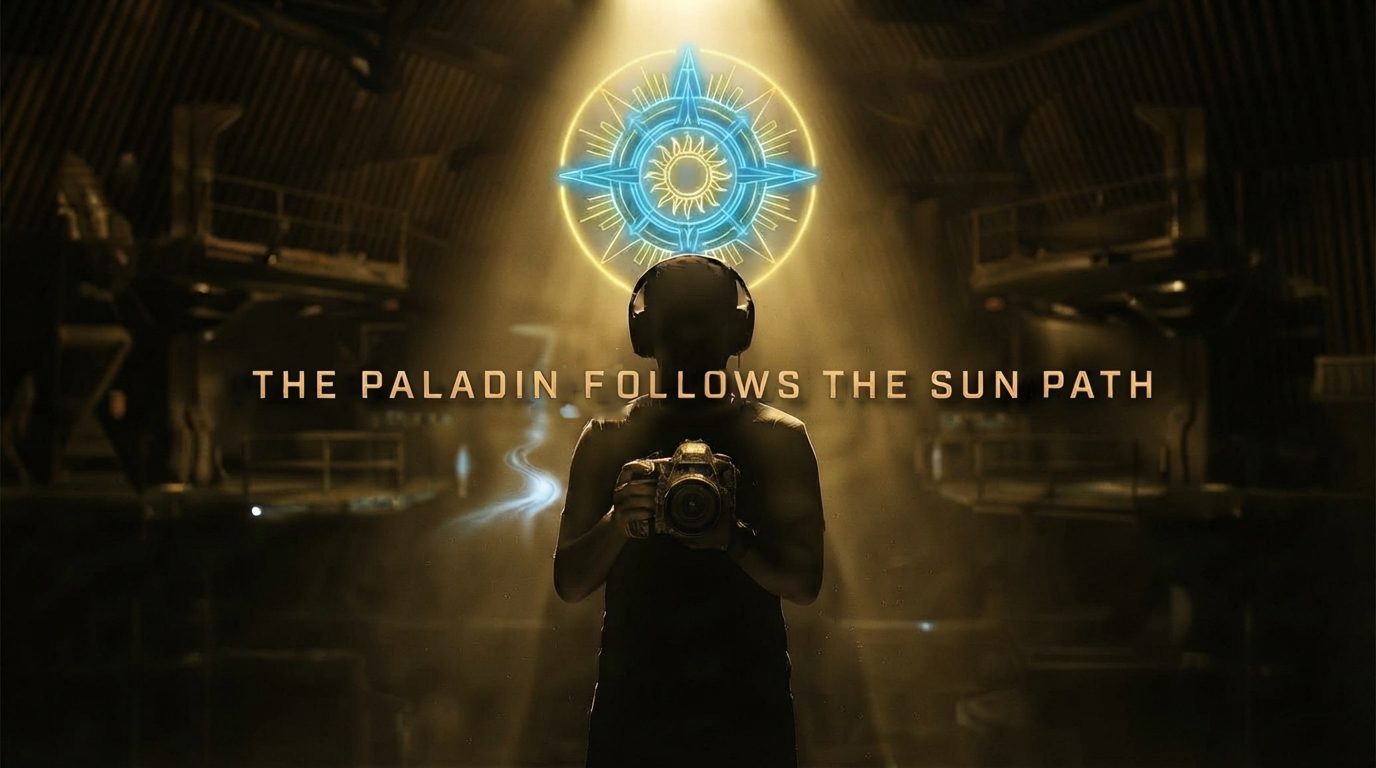
Looking back today, the sun path is an accurate description of the voyage I am still on. The path has sometimes been shrouded in mist. It has had unexpected twists and turns, falls and rises. But no matter the flow of the tides, the direction has always been the same: towards illumination. Towards clarity in complex situations. The insights have not always been found where you would expect them, which is part of what has made this journey so rewarding.
Sólfar is Old Norse. It means sun voyage, sun path. The name matters to me because our origin matters to me.
The more I collaborate with people of different backgrounds and experience, the more I understand how much my own heritage has shaped the way I think and approach challenges. We the people of the north have been innovating since even before the Viking Age: in navigation, shipbuilding, engineering, farming, craft and trade. It is easy to forget this in the rush of daily work. But I believe it is worth pausing occasionally to appreciate this history. It makes you humble. And perhaps paradoxically, it also raises your ambition, because you realise that making a genuine impact, even in a very focused field, is both possible and worth pursuing. The details matter. Together they form emergent phenomena that bring progress. You build brick upon brick, cog upon cog, and may not see the full picture clearly until much further down the road.
What this means going forward
Just as a captain updates his banner after years of voyages. Not to signal a change of course. But to better reflect earned experience and sharpened focus.
The battles are on the hull. The experience is earned. The flag finally says what the ship has always been.
Sólfar AI is not a new direction. It is a clearer expression of the one we have always been on. Same rigour. Same responsiveness to the domain experts: the doctors, engineers, and analysts who know things we don't. Same commitment to real outcomes over impressive demonstrations. The name now reflects what the work has always been: finding illumination in complexity, in exactly the environments where it is hardest and most necessary.
The path continues
What truly builds character and human achievement? Ten push-ups do not make you an athlete. Writing one page does not make you an author. Solving one problem for one client does not make you a leader in your field. But doing it consistently, over time, truly compounds, and so much more than I initially appreciated. Each engagement casts a vote for the kind of person you need to be, and the work you need to do.
This is that vote, made visible.
Back to Insights · Read the full Paladin Series